



A website for a business serving Switzerland begins with a more useful question than “How many languages should we add?” Which customers need to understand which offer, and what should happen after they contact you? A local service business, a hotel and an international supplier answer differently. Prix Studio can turn that decision into a practical website brief, an editable design and a clear release plan. The first review separates the language used for the project from the languages your customers actually require.
Start with the customer region, not a list of Swiss cities
Web development services should support the territory and customer task your business can genuinely handle. An installer operating around one city may need availability and an enquiry form; a supplier serving several regions may need specification pages and different contacts. Put the real service boundary into the brief. A page for every canton adds little if the offer, proof and response process are identical.
Write down one useful action for the first release: ask for an appointment, describe a job, request a quotation or reach the correct booking system. Then identify what the customer must know before taking that action. Service coverage, the work included and an understandable next step belong near the offer. This is a content decision before it becomes a layout decision. The employee receiving the request should help review it.
Use regional evidence where it exists. A real address, current service area and relevant completed work can help explain the business. A remote delivery team should describe how the project operates, without suggesting a Swiss office or a local visit that has not been agreed. The country page introduces the website-buying context; individual customer-location pages should be added only when their service and evidence justify a separate page.

Local enquiry
Define coverage and the information needed to assess one job.

Hospitality
Connect room and service information to an actual booking journey.

International supply
Make specifications and the right quotation contact easy to find.
Give each customer language a complete route to contact
International SEO services help plan the language relationships once the audience is clear. Switzerland has several language regions; an English project conversation does not establish that an English-only customer website is enough. Choose languages from customers, operating areas and existing enquiries. Translation, qualified review and ongoing updates are separate responsibilities, and each needs an owner.
A complete language journey includes the offer, navigation, enquiry labels, validation messages and the response expectation. Switching language should open the equivalent page when that version exists. If a particular service is available in one language only, make that limitation understandable instead of sending the visitor silently back to the homepage. Product names, addresses, dates and prices need editorial decisions as well as translated paragraphs.
Keep the route structure simple enough for your team to maintain. Regional language annotations can describe a genuinely equivalent Swiss-targeted version, while the canonical identifies that page’s own address. They do not replace useful content or guarantee a ranking. Turkish or Persian project communication can be considered separately from the public site language. Any language promised in the offer must have an agreed review and customer-response process.
- Project language
- How your team reviews the work and approves decisions.
- Customer language
- How a visitor understands the service, form and reply.
- Editorial owner
- Who validates terms and updates changed information.
Show the work that answers this website buyer’s question
UX audit and usability testing connect the visual system with the task a visitor needs to complete. Review one representative page on a phone before approving a large set of desktop screens. The offer, trust evidence and action should remain understandable without hover behaviour. A small component library can keep the site coherent while giving service, project and contact pages appropriate differences.
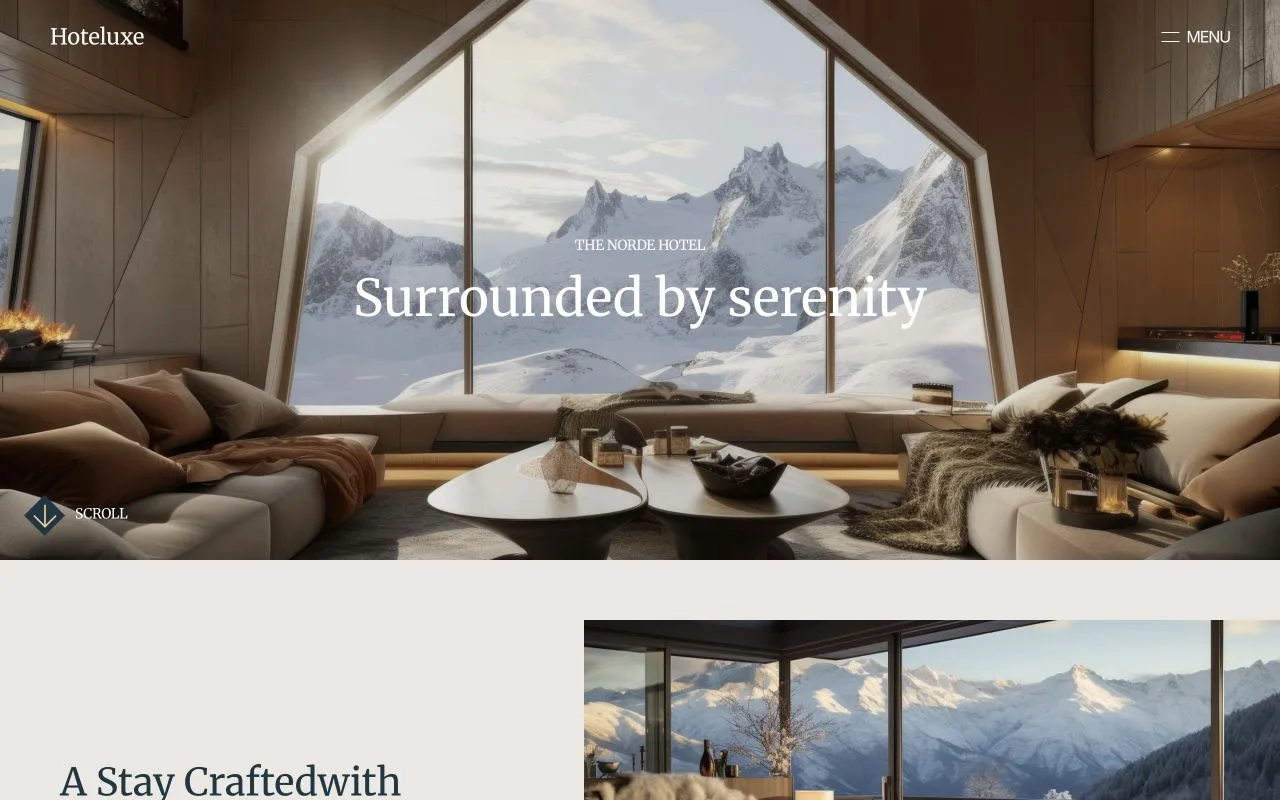
For a hotel website, room information and the route into booking are useful reference points. The published Hoteluxe portfolio provides a hospitality website example to inspect. It belongs beside a hospitality journey, with its actual scope described; it does not establish a sales improvement for every business in Switzerland. An industrial site should instead show matching product, capability or quotation work when that evidence is available.
Prepare original images, captions and business facts before design approval. A customer photograph needs permission and an accurate description. A diagram may explain the workflow more clearly than a stock photograph. Keep decorative motion restrained and respect reduced-motion preferences. The website should remain usable with a keyboard and at narrow widths. The content review should also remove unsupported badges, numbers and testimonials before they reach a published page.
Review on mobile
Inspect the actual enquiry or booking task with real copy.
Match the proof
Choose a project with the same business task and truthful scope.
Keep ownership clear
Agree who supplies and approves text, images and claims.
View the website example
Hoteluxe: hospitality website example
This published portfolio example is relevant to reviewing room and hospitality information on a website. It is a website reference, with no claimed booking uplift, ecommerce result or proof of a local Prix office.
View the website example ↗Test the complete enquiry or booking handoff
CRM and ecommerce integration is appropriate when a website request needs to enter an existing operational system. Start by recording the destination and the person responsible for the response. A booking link, a quotation request and a product order are different workflows. The site must not imply that a reservation is confirmed merely because a visitor has sent a form.
Choose fields for the decision your team must make. A local job might need a service type and location; a business quotation might need a requirement and an approximate quantity. Explain what happens after submission. Test required fields, error messages, repeated attempts and the server’s accepted response with safe test fixtures. A visual thank-you state is only one part of the handoff. Actual email or CRM delivery needs its own verification.
Consent and measurement should be reviewed for the real audience and tools. Swiss data-protection guidance is a useful starting point; applicability and legal wording need qualified review. Record which scripts run, where information goes and who manages access. A server-side collection method does not by itself solve consent or data-protection requirements. Keep email addresses, telephone numbers and free-form enquiries out of general analytics event properties.
- Map the destination
Name the receiving system and responsible team.
- Review the form
Use only fields needed for the next business decision.
- Verify the handoff
Separate accepted submission, delivery and qualified enquiry.
Buy a maintainable website with a defined release and handover
SEO migration services matter when an existing website is being replaced. Inventory useful current pages and incoming links before choosing the new structure. Preserve valuable addresses where possible and create reviewed redirects where they change. New publication dates should record the actual release; established article dates should remain factual. A redesign is an opportunity to improve the customer journey, not to manufacture a longer history.
The proposal should separate design, page types, content preparation, language review, integration and migration. Agree the invoice currency and scope rather than deriving a price from the country label. Schedule overlapping review hours using the actual dates and participants. Domain, CMS, hosting and analytics access should have named owners. If Swiss hosting or data location is required, verify the provider and deployment configuration before promising it.
Release acceptance should cover mobile usability, editing access, enquiry behaviour, redirects, indexable canonical pages, language equivalents, sitemap and metadata. Agree who checks issues after launch and which changes belong to ongoing support. For the first conversation, share your existing address, the customer region you serve and one journey you want to improve. We can then discuss an initial scope that your team can review and operate.
Questions and answers
Do we need every Swiss language on the first version?
No. Select languages from your customers, operating regions and evidence of demand. Budget for translation, review and ongoing updates. A complete journey in the required languages is more useful than partially translated pages.
Can we manage the project in English and publish customer pages in another language?
Yes, when the project communication and public language responsibilities are agreed. The customer-facing copy and reply process need suitable reviewers. Project language alone should not decide the website’s market language.
Can you preserve our existing website addresses during a redesign?
Review the current pages, incoming links and new architecture first. Useful URLs can stay in place. Changed addresses need mapped redirects, checked language equivalents and a release review.
Does a Switzerland URL guarantee visibility for Swiss searches?
No. The URL and regional language annotations help describe the page. Visibility also depends on useful content, competition, technical accessibility and other signals. No fixed ranking or indexing deadline is promised.
What information helps you assess our website project?
Share the current site, the area and customers you serve, required customer languages and one task you want to improve. Add existing content and operational systems so the first scope can reflect the actual work.
Plan your next step
Plan your Swiss-facing website
Share your current address, customer region and the enquiry or booking task that needs to work better.
Discuss the website scope